Will Installing an Inground Trampoline Destroy Your Garden Landscape?
It is one of the first questions homeowners ask when they fall in love with the idea of an inground trampoline. The kids are excited, the design looks sleek and modern, but there is a nagging concern sitting in the back of your mind: what is this going to do to my yard? Will digging a massive pit in the middle of the garden ruin everything I have worked to create outdoors?
The honest answer is that it depends entirely on how you plan and execute the project. An inground trampoline, done right, does not destroy a landscape. In many cases, it actually enhances it. Done carelessly, however, it can create problems that take years to fix. Here is what every homeowner needs to know before breaking ground.
The Installation Process and What It Actually Involves
To understand the impact on your landscape, you first need to understand what installation actually requires. Installing an inground trampoline means excavating a circular or rectangular pit roughly three to four feet deep, depending on the model and the manufacturer’s specifications. The excavated soil has to go somewhere, the pit needs to be reinforced and properly shaped, and a drainage system needs to be incorporated to prevent water from pooling beneath the jumping surface.
That is a significant amount of earthwork. Heavy machinery is sometimes used for larger pits, and even hand-dug installations disturb the surrounding soil considerably. The immediate aftermath of installation rarely looks polished. Bare soil, disturbed grass, and uneven ground around the edges are common in the days and weeks following the dig.
But this is the starting point, not the final result. What you do in the weeks after installation determines whether your landscape thrives or suffers.
The Real Threats to Your Garden
The installation process itself is temporary disruption. The longer-term threats to your garden landscape come from a few specific factors that are entirely manageable with the right approach.
Drainage problems are the most serious concern. When a pit is dug without adequate drainage planning, rainwater collects beneath the trampoline. Over time, this saturates the surrounding soil, creates waterlogged conditions that kill grass and plant roots nearby, and can even cause the ground around the pit to sink or shift. A properly installed drainage layer of gravel, or a dedicated drainage channel, prevents this entirely.
Grass death around the frame is another common issue. The frame of an inground trampoline sits at ground level, and the area immediately surrounding it tends to receive less sunlight and more foot traffic than the rest of the lawn. Without some deliberate planning, a ring of dead or worn grass often develops around the perimeter. Many homeowners solve this by installing a border of rubber mulch, decorative stones, or low-maintenance ground cover plants around the trampoline frame, turning a potential eyesore into an intentional design feature.
Disrupted root systems are a concern if you are installing near established trees, shrubs, or garden beds. Excavating close to mature plantings can sever roots and stress or kill plants that took years to establish. Site selection is critical. Choosing an open area of lawn well away from established plantings protects both your garden investment and ensures the trampoline installation goes smoothly without running into root systems mid-dig.
How Smart Installation Actually Improves Your Landscape
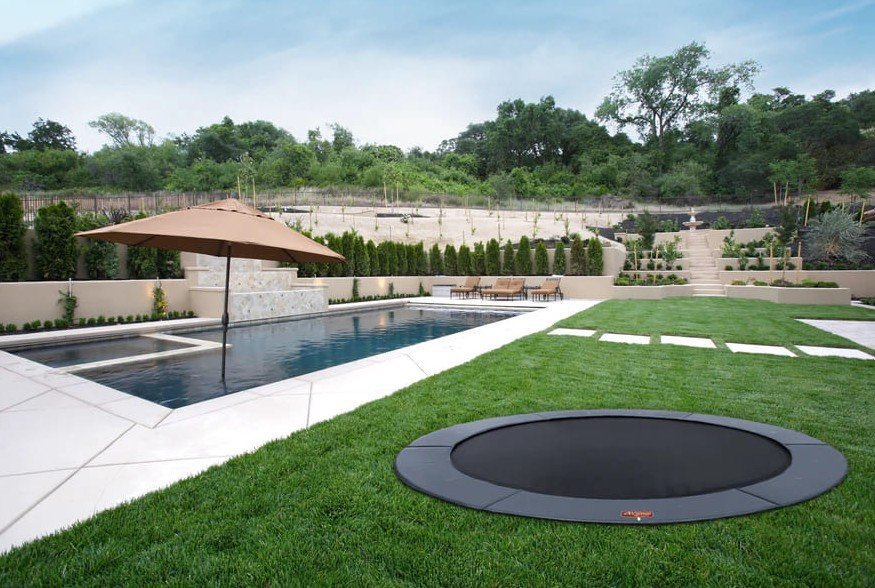
Here is the part most people do not expect. When planned thoughtfully, an inground trampoline can become one of the most visually appealing features in a backyard. Because the jumping surface sits flush with the ground, there is no hulking metal frame towering above the lawn. From certain angles, it nearly disappears into the yard entirely.
Homeowners who take the time to landscape around the installation often find that it gives them a reason to upgrade the surrounding garden. Artificial turf around the perimeter looks clean and requires zero maintenance. A low border of ornamental grasses or flowering perennials softens the edges and draws the eye beautifully. Decorative stone borders add structure and a finished quality that elevates the whole yard.
Some of the most impressive backyard transformations involve inground trampolines as the centerpiece of a larger outdoor living redesign, with the trampoline integrated into a level lawn surrounded by garden beds, seating areas, and hardscaping.
What to Do Before You Dig
The most important step you can take to protect your landscape is to plan thoroughly before a single shovel touches the ground. Walk the yard and identify where your established plantings, irrigation lines, and utility lines are located. Have utilities marked before digging. Choose a site that gets good drainage naturally and sits away from mature trees.
If your yard already has an irrigation system, consult a landscaper or irrigation specialist before breaking ground to ensure the system can be rerouted or protected during the dig.
An inground trampoline does not have to cost you your garden. With the right planning, it can be the best thing that ever happened to your backyard.