Balcony Garden Setup: How I Turned a Tiny Balcony Into a Space I Actually Loved
Why I Started a Balcony Garden in the First Place
I’ll be honest—my balcony used to be wasted space.
It was basically a storage area for random boxes, an old chair I never used, and a few dying plants I forgot to water. Not exactly inspiring.
Then one afternoon I saw a small apartment balcony online filled with herbs, hanging plants, and soft lighting, and I remember thinking, okay… maybe this tiny space has potential after all.
That’s what started my balcony garden setup journey.
And honestly? I made a lot of mistakes early on. Bought the wrong plants, overcrowded everything, ignored sunlight direction. The usual beginner chaos.
But once I figured out a few basics, the balcony slowly became my favorite part of the home.
Start by Understanding Your Balcony Conditions
Sunlight Matters More Than Décor
This was my first major mistake.
I bought plants purely based on how pretty they looked. Didn’t even check whether they liked direct sun or shade.
A few weeks later… crispy leaves everywhere.
Now I always start by checking:
- How many hours of sunlight the balcony gets
- Whether it faces east, west, north, or south
- Wind exposure
- Rain protection
South-facing balconies usually get the strongest sunlight, while north-facing ones stay cooler and shadier.
That one little detail changes everything.
Weight Limits Are Real (And I Ignored Them at First)
Nobody talks about this enough.
Large pots, wet soil, wooden furniture, and water features get heavy fast.
At one point I had way too many ceramic pots packed into one corner. Then I started wondering if maybe I should’ve checked the building’s balcony weight recommendations first.
Yeah… lesson learned.
Now I mostly use:
- Lightweight plastic planters
- Fabric grow bags
- Vertical shelves
Much safer and easier to rearrange too.
Choosing the Right Plants for a Balcony Garden
Start With Easy Plants First
I made the classic mistake of choosing high-maintenance plants immediately.
Bad move.
The easiest plants I’ve personally had success with:
- Pothos
- Snake plants
- Basil
- Mint
- Lavender
- Cherry tomatoes
- Spider plants
Herbs especially worked great because they’re practical and smell amazing after watering.
Mint, though… be careful. That thing spreads like crazy.
Match Plants to Sunlight Conditions
Full Sun Plants
If your balcony gets strong sunlight:
- Tomatoes
- Rosemary
- Lavender
- Peppers
- Succulents
Shade-Friendly Plants
For lower-light balconies:
- Ferns
- Pothos
- Peace lilies
- Snake plants
I ignored this advice early on and basically cooked a fern in direct afternoon sun. Poor thing never recovered.
Best Containers for Balcony Gardening
Don’t Use Heavy Pots Unless Necessary
Ceramic pots look beautiful, sure.
But after moving them once—or trying to clean around them—you realize lightweight containers are much more practical.
Now I mostly use:
- Plastic planters
- Hanging baskets
- Vertical wall planters
- Railing planters
Railing planters especially saved space on my tiny balcony.
Honestly, they made the whole setup feel bigger.
Drainage Is Extremely Important
This part nearly ruined my plants.
I used decorative pots without drainage holes because they looked nice.
Huge mistake.
Water sat at the bottom and caused:
- Root rot
- Fungus
- Yellow leaves
Now I refuse to use containers without proper drainage.
Even the prettiest pot isn’t worth dead plants.
Vertical Gardening Changed Everything
The Best Trick for Small Balconies
Once floor space started disappearing, I realized I needed to grow upward instead of outward.
Vertical gardening helped more than I expected.
I added:
- Wall-mounted shelves
- Hanging planters
- Trellises
- Ladder racks
Suddenly the balcony looked fuller without feeling crowded.
And honestly, vertical plants make small spaces feel surprisingly cozy.
Balcony Furniture That Actually Works
Small Furniture Is Better Than “Complete Sets”
I almost bought a giant outdoor furniture set once.
Thank goodness I measured first.
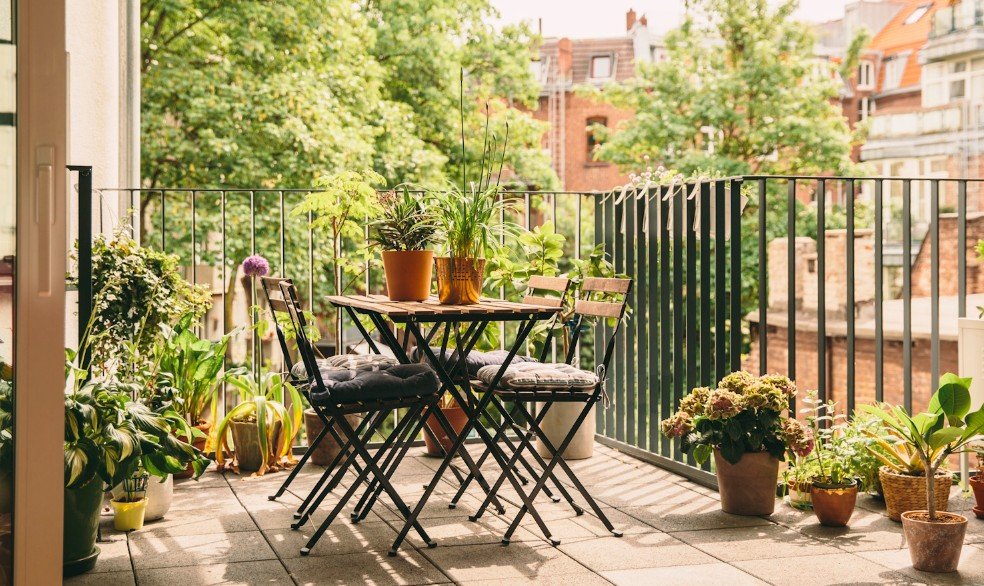
For balcony gardens, compact furniture works best:
- Foldable chairs
- Small café tables
- Storage benches
- Stackable stools
I found that leaving open walking space matters more than adding extra furniture.
Too much furniture makes the balcony feel stressful instead of relaxing.
Lighting Made My Balcony Feel Completely Different
Warm Lighting Creates the Best Atmosphere
I underestimated balcony lighting for way too long.
Once I added warm LED string lights, the entire space changed at night.
It suddenly felt:
- calmer
- more inviting
- more “finished”
I also added:
- Solar lanterns
- Small floor lights
- Battery-powered candles
Soft lighting works much better than harsh white lights.
Trust me on that one.
Watering Mistakes I Kept Repeating
Balcony Plants Dry Out Faster Than You Think
Balcony gardens heat up quickly, especially on upper floors.
I lost several plants because I underestimated how fast containers dry out.
Now I check soil moisture daily during hot weather.
But overwatering is still possible too.
That balance took me forever to figure out honestly.
Morning Watering Works Best
I used to water plants randomly during the afternoon.
Turns out morning watering is way better because:
- less evaporation occurs
- plants absorb moisture before heat peaks
- fungal problems are reduced
Small habit, huge improvement.
Decorating Without Overcrowding the Space
Simplicity Usually Looks Better
This was hard for me.
I kept wanting to add:
- more plants
- more decorations
- more colors
Eventually the balcony started looking chaotic instead of peaceful.
Now I follow a simple rule:
Leave some empty space.
It makes the garden feel cleaner and easier to enjoy.
Budget-Friendly Balcony Garden Tips
You Don’t Need Expensive Décor
Honestly, some of my favorite balcony upgrades were cheap:
- thrifted pots
- DIY shelves
- recycled containers
- solar lights
Plants themselves create most of the beauty anyway.
Fancy décor helps, sure—but healthy greenery does most of the work.
What I Love Most About Having a Balcony Garden
The biggest surprise wasn’t how the balcony looked.
It was how it felt.
Watering plants after a stressful day became weirdly relaxing.
Even sitting outside for ten minutes with coffee felt different once greenery surrounded the space.
And honestly, that little mental reset matters more than I expected.
Conclusion
Setting up a balcony garden is one of the easiest ways to transform a small outdoor space into something functional, relaxing, and visually appealing.
From my experience, the biggest improvements came from:
- understanding sunlight conditions
- choosing low-maintenance plants
- using vertical gardening techniques
- avoiding overcrowded layouts
- adding warm lighting
You don’t need a huge balcony or expensive furniture to create a beautiful setup.
A few healthy plants, good lighting, and thoughtful organization can completely change how the space feels.
And yeah, you’ll probably kill a few plants at first. That’s normal.
Honestly, it’s part of learning.
FAQ: Balcony Garden Setup
- What are the best plants for a balcony garden?
Pothos, herbs, lavender, snake plants, and cherry tomatoes are great beginner-friendly options.
- How do I start a balcony garden in a small space?
Use vertical gardening, railing planters, and compact furniture to maximize space.
- How much sunlight do balcony plants need?
It depends on the plant type, but many vegetables need 6–8 hours of sunlight daily.
- Can balcony gardens work in shade?
Yes, many plants like ferns, pothos, and peace lilies thrive in lower light conditions.
- What containers are best for balcony gardens?
Lightweight containers with proper drainage holes work best.
- How often should balcony plants be watered?
Balcony plants often need more frequent watering because containers dry out quickly.
- Are vertical gardens good for balconies?
Yes, they save space and add visual depth to small balconies.
- How can I make my balcony garden look cozy?
Use warm lighting, simple furniture, layered plants, and avoid overcrowding decorations.